Raw Material Sourcing and Preparation
Types of Human and Synthetic Hair
Raw material sourcing determines the quality of any weave. We often see human hair imported from India or South America, where temples and villages provide long strands with intact cuticles. Synthetic hair, however, comes from extruded polymers like modacrylic or PVC, produced in industrial settings.
Preparation demands precision! Human hair is washed, conditioned, and sorted by texture. The cuticles must remain aligned to prevent matting. Synthetic fibers are heat-set to create curls or straightness.
- Human hair types: Virgin, Remy, Non-Remy
- Synthetic types: Kanekalon, Toyokalon, polyester blend
Understanding how are weaves made starts with these choices. The raw material dictates the method, so a stylist must adapt.
Cleaning and Sanitizing Processes
Raw material sourcing is a supply chain problem. Human hair arrives in tangled bundles that require careful handling. Synthetic fibers arrive as industrial extrusions with no cuticles to protect. Both require serious preparation.
Cleaning and sanitizing is tedious but essential. The hair is washed, conditioned, and sorted by texture. Cuticles must stay aligned to prevent matting. Antibacterial solutions remove contaminants, then rinsing and air drying follow.
- Remove tangles with a wide-tooth comb
- Soak in lukewarm water with gentle shampoo
- Rinse with cool water to seal the cuticles
- Air dry on a clean towel
How are weaves made possible without this sanitation? They aren’t. This step prevents scalp irritation and ensures the weave lasts longer than your last failed diet. How are weaves made with integrity? It starts right here.
Sorting by Length, Color, and Texture
Once the hair is clean and dry, the sorting process starts. Sorting by length, color, and texture is the core of how are weaves made. A single bundle can contain strands that range from pixie-short to waist-length. Matching them incorrectly creates a choppy mess no one asked for.
Length matters because weaves need uniform ends. Color matching is equally brutal. Natural hair has multiple tones, so a flat, single-shade bundle looks fake immediately. Texture determines how the weave blends with your own hair, whether it is bone-straight, kinky, or something in between.
In my experience, the process follows a strict rhythm:
- Separate strands by hand into length groups.
- Match color against a reference swatch under natural light.
- Group by texture using touch and visual inspection.
This sorting stage answers the question of how are weaves made to look seamless. Skipping it produces a weave that looks wrong from every angle.
Chemical Relaxing and Coloring
Before sorting begins, the raw material must be sourced and prepared. In South Africa, most premium weft hair comes from temple offerings or rural collectors who pay donors per inch. These donors often grow hair for years. The cut hair arrives tied at the root. My experience with suppliers in Durban shows that honesty matters here. Some vendors claim virgin hair but pass off chemically treated strands.
Chemical relaxing and coloring change everything. Relaxing straightens natural curls using alkaline creams. Coloring then infuses pigment into the cortex. Overlapping relaxers causes breakage. Incorrect dye timing leads to frizz.
The typical preparation cycle follows this order:
- Test a strand for porosity.
- Apply a mild acid rinse.
- Process the relaxer in short intervals.
- Rinse and neutralize.
That is the quiet truth of how are weaves made. Rushed chemistry ruins even the best-sourced hair.
Cuticle Alignment and Preservation
All the honesty in Durban’s hair market cannot save a weft if cuticles face the wrong way. Raw hair arrives with strands pointing in every direction. Those overlapping scales, called cuticles, can snag against each other. Left misaligned, they mat within weeks.
The preservation ritual follows a strict sequence:
1. Dampen the bundle lightly with cool water.
2. Brush from root to tip using a boar bristle brush.
3. Secure the aligned strands with a loose elastic band.
4. Allow the bundle to air dry completely.
This is where how are weaves made truly succeeds or fails. Proper alignment protects the cortex from friction damage during weaving. It also locks in natural shine. Rushing this stage creates tangles that no conditioner can fix.
Weaving Construction Techniques
Hand-Tied Weft vs. Machine Weft
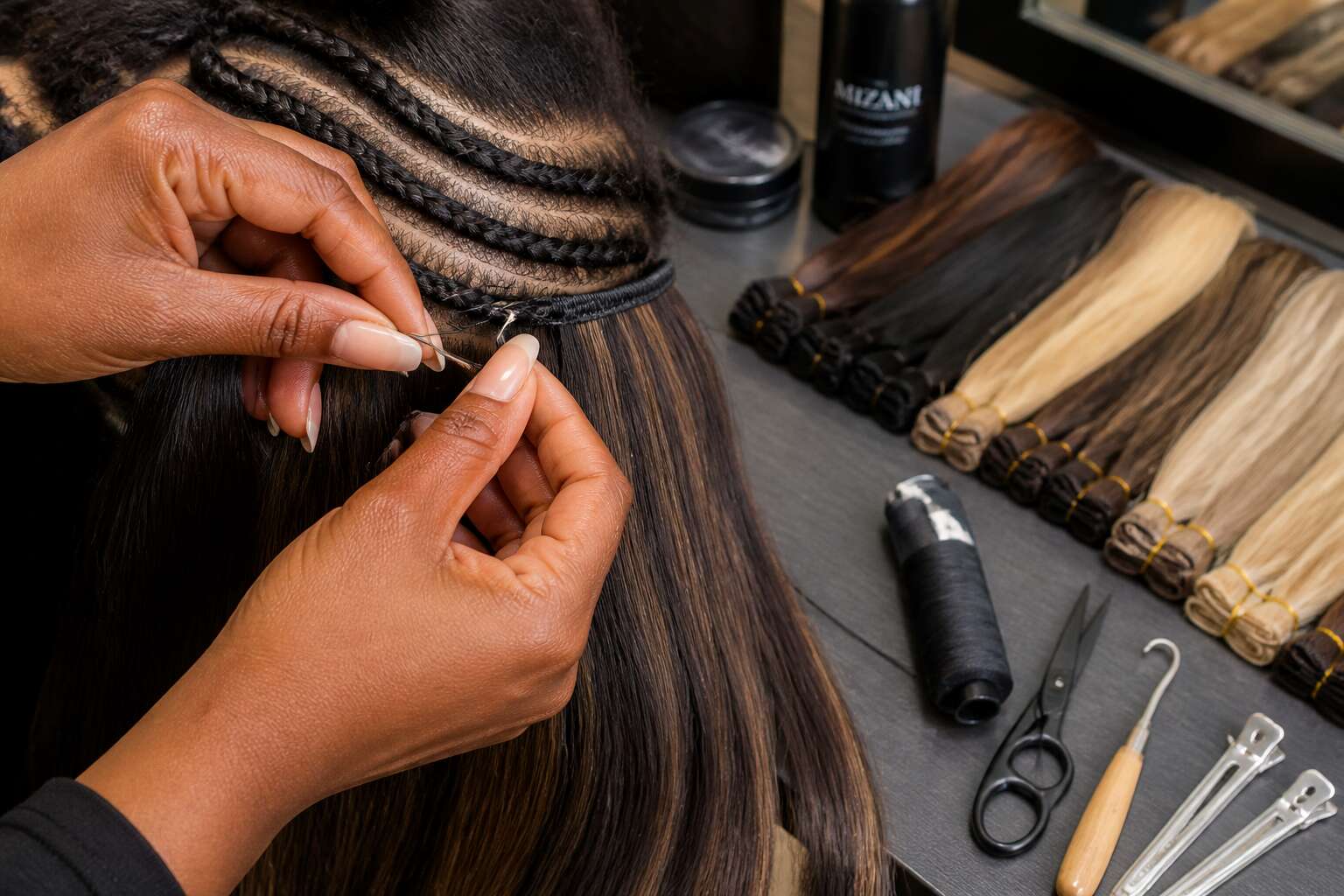
The way wefts are built answers how are weaves made at a fundamental level. Hand-tied wefts require a ventilating needle. Each hair strand is knotted individually onto a silk thread track. This creates a flat, flexible base. Machine wefts are sewn rapidly. They produce a dense, uniform row at a lower cost. The base is stiffer and thicker.
Here is what separates the two:
– Hand-tied wefts are lighter and sit closer to the scalp.
– Machine wefts provide more volume but can shift during wear.
– Hand-tied wefts cost more due to labour time.
Machine wefts offer economy and density. Hand-tied wefts offer movement and longevity. For South African women, the right choice depends on hair type and styling routine. Both methods remain important in how are weaves made, yet a quick touch tells you which is which!
Single Weft and Double Weft Methods
A double weft is two single wefts sewn together, yet that extra layer alters the entire fit. Single weft construction yields a thin, flexible base that contours to the scalp. Double weft construction creates a firm, dense foundation for women who crave volume without stacking rows. In South Africa’s humid climate, the heavier double weft can trap heat, while the single weft promotes airflow.
How are weaves made to match different lifestyles? The answer lies in these two approaches. Shoulder length and natural movement suit a single weft. Long, glamorous fullness demands a double weft.
- Single weft: featherlight and easy to part
- Double weft: solid and high impact
Stitching Patterns and Tension Control
How are weaves made with true precision? It begins with the stitching pattern. A zigzag stitch grants flexibility for natural movement, while a straight stitch locks the track flat against the scalp. A lock stitch offers lasting durability for dense wefts. Each pattern serves a purpose, and the choice changes how the weave behaves.
- Zigzag stitch for flexibility
- Straight stitch for a flat base
- Lock stitch for long lasting hold
Tension control is the quiet art behind every installation. As a weaver, I press each row with my fingertips to feel the give. Too tight, and the weave tugs at the roots. Too loose, and it shifts by day two. In our humid South African climate, balanced tension lets the weave breathe with the scalp, preventing heat buildup and discomfort.
The Machine Manufacturing Workflow
Setting Up the Weaving Loom
Setting up a weaving loom is where precision matters most. The operator’s eye, not the machine’s hum, determines whether a weft will lay flat or bunch up. Before any thread moves, the loom must be aligned carefully.
The process begins with selecting the correct needle gauge and thread type. Both are matched to the hair’s weight and texture, as even a slight mismatch creates uneven rows. Then comes the loading of the weft tape.
- Thread the needle with the chosen polyester or cotton thread.
- Set the needle depth to match the hair bundle’s density.
- Lock the weft tape into the feeder, ensuring no twists.
Each of these choices directly influences how are weaves made, turning raw strands into a seamless strip. A skilled technician watches for subtle snags, often stopping the machine to correct a wayward fiber.
Threading and Feeding Mechanisms
The machine’s threading system demands absolute discipline. Each polyester filament must pass through three tension gates before it ever touches the weft tape. Miss one gate, and the weave develops a sloppy edge that no amount of pressing can fix.
Feeding mechanisms rely on synchronized rollers that pull the weft tape forward at precise intervals. The tape’s speed must match the needle’s rhythm exactly. Even slight drift creates gaps visible only under magnification, yet those gaps shorten the weave’s lifespan.
Operators monitor the thread path constantly. They listen for the characteristic hiss of a clean feed, and they react when that sound changes. This vigilance is essential to how are weaves made at scale.
The machinery is unforgiving. Threads that snap mid-run are not simply re-threaded; the entire segment must be restarted to preserve uniformity. This reality shapes how are weaves made, where a single careless feed ruins hours of careful work.
Automated Stitching and Trimming
Automated stitching removes the human variable from the most repetitive motions. The machine’s needle bar drives a uniform lock stitch along the weft tape, while rotary blades trim excess thread within milliseconds. This synchronization is not magic. It is precision engineering. Sensors read the tape’s edge every few centimeters, adjusting trim depth to prevent fraying.
I have seen operators trust this process completely, which is a strange thing to witness. They stand back and let the machine work. That trust is earned through relentless calibration.
A typical automated workflow involves:
- Loading the pre-sorted hair into the feeder.
- Stitching the weft at a set tension.
- Trimming loose filaments automatically.
- Stacking finished wefts for quality review.
Each step feeds into how are weaves made at industrial scale. The machine does not tire, but it also does not care. A misaligned trim ruins a batch, so the human eye remains the final check. Understanding how are weaves made in this automated context reveals why consistency matters more than speed.
Heat Sealing for Edge Durability
After the trimmer’s blades finish, heat sealing takes over. This is where the weft’s edge is fused to resist fraying and curling. The tape passes over a heated element set to a precise temperature, melting fibre ends just enough to bond them without hardening the texture. Too cold and the seal fails within days. Too hot and you introduce a brittle edge that snaps during installation.
How are weaves made for the South African market demands this balance. Humidity and regular styling punish weak seams. Calibrated rollers press the sealed edge flat while it cools, so the weft lies smooth against the scalp. Heat sealing protects against:
- Fraying at the ends after repeated washing
- Curling and distortion from moisture
- Shedding during combing and brushing
Customization and Styling Additions
Cutting and Shaping Weft Tracks
Customization is where weaves transform from functional to signature. During cutting and shaping, weft tracks get tapered at the edges to mimic natural scalp lines. This step clarifies how are weaves made ready for styling. Additions like lace melting and custom baby hair require track placement that follows the client’s hairline. The load-bearing sections must stay flat, while perimeter tracks curve tightly. Precision cutting removes bulk, preventing telltale ridges.
- track tapering for temple contours
- micro-stitching for curved edges
- layering for crown volume
Each cut influences movement. Shaping the weft tracks before installation saves hours later. The result is a foundation that accepts styling without compromise.
Curling, Straightening, and Texturizing
Once the weft tracks are shaped, the final character of the weave emerges through styling. Curling, straightening, and texturizing are not afterthoughts. They determine how the hair moves, falls, and behaves in humid Johannesburg weather or coastal Durban air.
Heat protection is non-negotiable. Quality human hair wefts respond to a flat iron at 180 degrees, while synthetic blends require lower temperatures. Curling wands create soft bends or tight spirals depending on the barrel size and hold time. Texturizing sprays add grit and volume, giving fine wefts a fuller silhouette.
- Use a heat protectant spray before any hot tool touches the weft
- Test a small strand first to gauge the ideal temperature
- Allow the weave to cool completely before brushing or combing
This finishing stage is where the craftsmanship of how are weaves made becomes visible. A well constructed weft takes styling without frizzing or losing its track integrity.
Color Blending and Highlight Placement
Color blending is an architectural step in understanding how are weaves made. A single flat shade reads as synthetic, so we map the roots, mid-lengths, and ends to mimic natural growth patterns. Highlight placement is never random. We stitch face-framing strands to catch light first and place deeper lowlights at the rear to add density without bulk.
To match a specific movement, we tailor the placement:
- Frontal wefts get subtle highlights to soften the hairline
- Middle layers carry the boldest tonal shifts for lived-in depth
- Lower wefts stay darker to anchor the silhouette
These customisation choices finalise the visual weight. The true test of craftsmanship is whether the highlight lines survive a windy Cape Town day without looking patchy. No two weaves should exit the studio looking identical!
Attaching Clips, Tapes, and Elastic Bands
Attachment points decide whether a weave survives a Cape Doctor gust or slips by lunchtime. Three out of five failures trace back to anchor methods, not hair quality. We treat clips, tapes, and elastic bands as engineering decisions.
Clips suit temporary wear. We sew them onto the weft base, spacing each clip a thumb’s width apart. Tapes work for flat sections. We press the adhesive strip along the weft edge. Elastic bands offer full head security. We loop them through the weft track and stitch the ends shut.
Understanding how are weaves made includes these attachment layers. The base weft carries the clip weight, so reinforced threading matters here. We test each anchor by tugging at forty five degrees. If the weave shifts, we redo the stitch pattern. Ask how are weaves made, and the anchor system will appear in every step.
Embellishments and Decorative Elements
Customization turns a standard weave into a signature piece. After the weft is cut and shaped, we add embellishments that reflect personal taste. Beads, crystals, and hand-dyed threads get sewn directly into the weft base. This step happens after anchor attachment, so the decorations never interfere with clips or tape.
Decorative elements need to bend with the weave. We use flexible wire for pearl strands and silicone-backed charms for flat sections. The stitching pattern for embellishments uses smaller needles and monofilament thread. That keeps the front smooth while the back remains comfortable. Consider these popular additions:
- Brass rings for bohemian styling
- Silk ribbons woven through the track
- Miniature cowrie shells for coastal flair
Each addition changes the weight distribution, which affects how the weave sits. We balance heavier ornaments near the elastic band or clips. Understanding how are weaves made includes these finishing touches, because the decoration becomes part of the structure.
Layering and Volume Adjustments
Layering adjusts volume after the weft is assembled. I set two tracks at the nape and taper them toward the temples for a graduated lift. For dramatic fullness, an extra weft section at the crown gets anchored and combed over. The spacing between layers matters. Each track needs its own anchor point, or the whole weave bunches.
Use these layering variations:
– A shorter track on top reduces bulk.
– Clips angled outward create a flatter profile.
– A silicone strip between layers adds cushioning.
The final shape depends on track alignment with the scalp. Every tweak changes drape and movement. Understanding how are weaves made includes these adjustments, because the structure controls the finished volume.
Quality Control and Packaging
Inspection for Shedding and Defects
At the final inspection table, each weft is pulled taut and shaken under bright light. Shedding reveals itself as loose strands that give way too easily, while defects appear as uneven stitching or gaps along the track. The inspector’s hands become instruments of judgment, feeling for inconsistencies that the eye might miss. This is where craftsmanship meets accountability, and the quiet weight of that responsibility settles into every decision made.
The inspection protocol follows a deliberate sequence:
- manual tug tests on both weft ends to detect weak fibers
- microscopic review of cuticle alignment for hidden damage
- tension checks along the entire length to catch subtle fraying
Packaging then becomes a protective ritual, sealing each piece against moisture, friction, and the wearer’s daily demands. Understanding how are weaves made requires acknowledging this final gate, where quality is proven and trust is earned through honest, unforgiving scrutiny. Each sealed bundle carries that assurance forward into the world.
Washing, Conditioning, and Detangling
Before the bundle is sealed, every weft passes through one final wash, conditioning, and detangling sequence. This step exists to reset the hair so it arrives ready for installation, not to strip or alter what came before.
The wash uses a gentle, pH balanced formula. The conditioner restores moisture lost during stitching and heat sealing. Then each strand is slowly worked through with a wide tooth comb, starting at the ends and moving upward. This prevents breakage that would otherwise surface within weeks of wear.
For certain textures, the detangling routine adds a protein treatment to reinforce weak points:
- Keratin infusion for fragile cuticles
- Argan oil sealing for dry ends
- A cool water rinse to close the cuticle
Understanding how are weaves made means acknowledging this final step. It separates hair that looks good on a shelf from hair that survives everyday wear.
Drying and Setting Processes
After detangling, drying becomes a precise operation. Wefts move through a temperature controlled chamber where airflow pulls moisture away slowly. This step prevents the hair from swelling or warping during setting. Each weft is then stretched on a frame to its final track length, and the cuticle locks into place as it cools.
Quality control happens at this precise moment. Inspectors examine every weft for shedding, loose loops, and inconsistent thickness. They also check the sealed edges for durability. Packaging follows immediately, with each bundle folded into acid free paper and sealed.
- Run a fingernail along the weft to test for slippage
- Measure track width against the standard
- Verify the heat sealed edge has no gaps
All of this matters when you ask how are weaves made, because the final seconds determine if the product survives shipping and installation.
Final Styling and Presentation
Quality control becomes a matter of integrity. Every bundle carries the work of many hands, and the inspection decides whether that work is honoured. We flex each weft, hold the track to the light, and press the stitching with a thumb to detect hidden weakness. This is the quiet moment where a product either earns its name or fades from memory.
Presentation completes the transaction. Bundles are folded into uniform loops, wrapped with ties, and placed in packaging that shields the cuticle through transit to Johannesburg, Durban, or Cape Town. The label carries weight, length, and colour code, allowing a stylist to trust the contents before opening. How are weaves made becomes visible in this restraint.
Final styling adds the last human touch:
- Brushing the track to align the fibres
- Tucking loose loops beneath the stitching
- Trimming the ends to a clean edge
A sheen spray restores gloss lost during processing, and the weft is ready for installation.



0 Comments