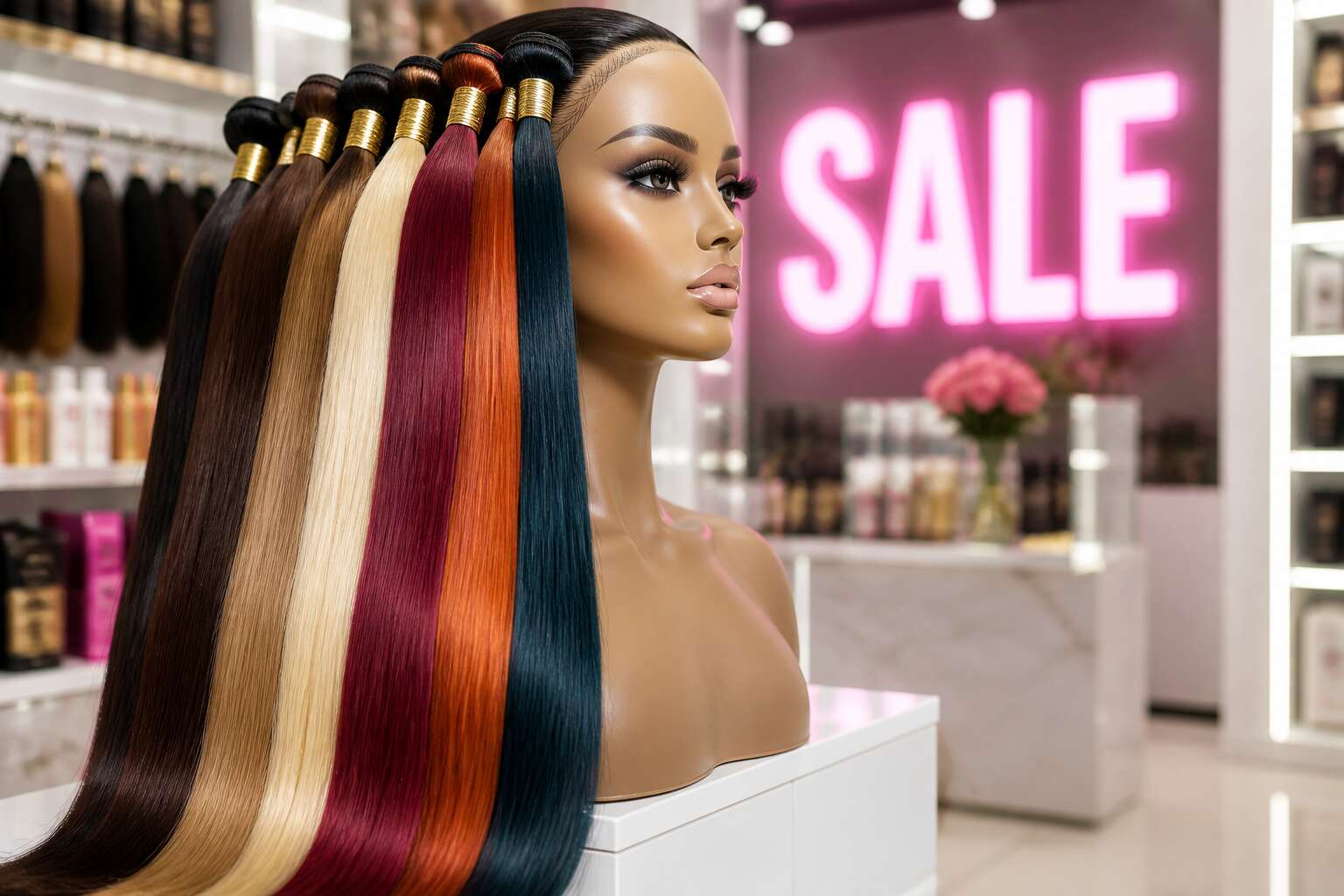
Understanding the Hair Weave Market
Why Weave Prices Fluctuate
The global hair extension market now moves billions of dollars annually, and South African consumers feel every shift. When the rand weakens against the dollar, the price of quality human hair jumps within days. That is why weaves on sale often feel like a lucky break; the margins are too tight for regular discounts.
Price movements are not random. The market depends on supply cycles in India and China, where most raw hair is collected. A poor harvest season, or a sudden rise in international orders, changes wholesale rates quickly. Local import duties and transport fees then add their own weight.
The main drivers are straightforward:
– The rand to dollar exchange rate
– The amount of raw hair available at source
– Shipping delays and fuel price increases
– The rush around wedding and graduation seasons
Understanding these forces helps you recognise when genuine weaves on sale appear, usually as retailers clear stock after a major holiday push.
Types of Weaves and Their Price Ranges
Walking into a Durban hair shop, you will see bundles labelled Brazilian, Peruvian, or Malaysian. Each tells a different story. Brazilian hair is thick and heavy, often priced between R1,200 and R3,500 per bundle. Peruvian hair is softer and lighter, sitting in the middle range. Indian remy hair offers solid value for a first-time buyer, while Malaysian hair remains the affordable workhorse. I always tell clients that texture matters more than the label. Virgin hair lasts a year with proper care, processed hair half that. When you spot weaves on sale, inspect the cuticle alignment and the density before committing. A genuine discount on good hair is rare, so understanding these differences helps you act fast.
- Machine weft: affordable and common
- Hand tied weft: flat against the scalp
- Tape in: quick to apply, higher upkeep
Seasonal Sales and Promotional Cycles
In the South African hair trade, the most dependable markdowns follow the calendar. January’s back to school spending and the December festive splurge leave stockrooms overfull, so February becomes a clearing period. Retailers quietly reduce prices to clear inventory before the next shipment lands.
The pattern repeats around Easter and the mid year tax season. Promotional cycles also align with paydays; the first week of the month sees fewer reductions, while the last week brings urgent offers. I have noticed that for anyone hunting weaves on sale, the calendar drives the price as much as the hair itself.
- February post-holiday clearance
- Easter weekend specials
- June tax season promotions
- Black Friday and Cyber Monday
Durban wholesalers rarely advertise these cycles openly. The discount period ends quickly, so buyers who track the monthly pattern can catch weaves on sale before stock disappears.
Online vs. In-Store Pricing
The cost of the same weave can shift by hundreds of rands depending on where you buy it. A downtown Johannesburg shop pays premium rent, so that price includes a floor, a mirror, and the salesperson’s patience. Online vendors dodge those overheads, but they add shipping fees, and you cannot inspect the strands before payment.
When hunting weaves on sale, the channel changes your odds. In-store markdowns vanish in a morning. Online promotions linger, yet they can hide defects! For most shoppers, weaves on sale appear when they monitor both routes.
- Retail stores let you feel the hair’s density, yet you pay for the location.
- Online shops expose price history, but you risk a texture mismatch.
In South Africa, the savviest buyers track both arenas. A Durban wholesaler posts a clearance on Instagram, while a Pretoria chain hides the same discount in its physical store. Neither guarantees a bargain.
Strategies for Scoring Affordable Weaves
Timing Your Purchase Around Major Sales Events
Patience alone won’t secure the best deal on weaves on sale. In South Africa, major sales events like Black Friday and the January clearances reward those who observe the pattern of price drops. Retailers often reduce prices in stages, so the deepest markdowns appear during the final hours when inventory is low. The strategic buyer tracks these windows.
Preparation matters more than chance. Know your preferred length and texture in advance, then set calendar alerts for the specific days when stores tend to slash weave bundles. This approach lets you act the moment a discount matches your budget, without delays. By timing your purchase around the last day of a major event, you can find weaves on sale at prices that feel almost unreasonable.
Leveraging Coupon Codes and Cashback Offers
Only 18% of online shoppers ever apply a coupon code, a number that should bother you! When you see weaves on sale, the marked price rarely stands as your final expense. A code from the retailer’s loyalty programme trims 10% to 15% off instantly, while cashback apps quietly refund a percentage of what you spend.
Stack these mechanisms. Use the code at checkout, then trigger the cashback through your banking partner or a dedicated portal. The two combine to pull the real cost of your purchase down to a level that patience alone cannot reach.
Buying in Bulk vs. Single Bundles
Here is a truth that your bank balance will appreciate: buying weaves on sale in bulk feels like a power move until you are staring at three identical bundles of jet black yak hair in your wardrobe six months later. Single bundles offer flexibility, especially if you like switching up your look more often than a Cape Town weather forecast changes its mind.
Consider this before you commit to the bulk option:
- Bulk purchases only save money if you actually use every piece you buy. Unused bundles are not a bargain, they are an expensive hobby.
- Single bundles let you mix and match with your existing collection, which means more styles for less cash over time.
When you spot weaves on sale, the real question is not about the price per gram. It is about whether you are buying a wardrobe staple or a warehouse problem. Your decision should mirror your patience. Bulk suits the committed, singles suit the flirtatious. Both can be genius, but only one will leave you with space in your cupboard.
Exploring Wholesale and Clearance Sections
Walk into any fabric district in Johannesburg or Durban and you will see the same ritual. Sellers pull out bundles from under counters, and savvy shoppers inspect cuticles and density. The wholesale section is where weaves on sale stop being a marketing phrase and become a negotiation.
Clearance sections work differently. They hold discontinued shades and textures that did not sell. That is not a flaw. A hairdresser who wants a unique look can find premium hair at a fraction of the ticket price. The trick is knowing what you need before you browse.
- Damaged packaging often hides missing labels.
- Texture varies between batches even in the same brand.
- Return policies on clearance goods are usually strict.
Wholesale often demands minimum orders. Clearance does not. Both reward a patient shopper who can spot weaves on sale in the middle of an unglamorous aisle.
Evaluating Quality When Discounts Are Deep
Check the Hair Grade and Cuticle Alignment
According to a 2024 trade survey, fewer than ten percent of deeply discounted bundles survive a second wash without matting. That reality makes evaluating quality essential when you spot weaves on sale. Hair grade and cuticle alignment are the two primary quality measures. A Remy grade with 10A rating offers fully aligned cuticles, but clearance bins often hold lower rated stock with misleading labels.
Cuticle alignment reveals itself through touch. Buyers slide their fingers along the weft from tip to root. Even resistance indicates healthy scales that lay flat. Snags point to broken cuticles or reversed strands, leading to tangles within weeks. Many Johannesburg buyers carry a small comb to test discount bundles before spending their rand.
Identifying Remy vs. Non-Remy Hair
Deep discounts on weaves on sale often hide a critical difference. Remy hair keeps its cuticles aligned in one direction. Non-Remy hair is either stripped of cuticles entirely or mixed from multiple sources. That distinction shows itself within minutes. Run your fingers along a single strand. Remy hair offers a smooth, continuous surface. Non-Remy hair feels rough or uneven immediately.
- Remy hair sheds very little when you tug on the weft
- Non-Remy hair sheds strands even during a gentle shake
Another test involves heat. A small flame near a strand from Remy hair produces a clean ash. Non-Remy hair melts into a sticky ball. When a bargain price appears, inspect the bundle closely. Your fingers and a lighter will reveal more than any label.
Reading Customer Reviews for Red Flags
A deep discount on weaves on sale demands a second look at customer feedback. Reviews often reveal what product photos hide. I always scan for repeated mentions of tangling, shedding, or an odd chemical smell. One negative review means little. A pattern means something.
- Repeated mentions of wefts separating at the seam
- Complaints about color mismatch between bundles
- Reports of scalp irritation after a few hours of wear
Verified purchases carry more weight than anonymous praise. When weaves on sale mimic premium branding but reviews tell a different story, trust the signal. Your fingers and a lighter already gave one answer. The review section gives the other.
Understanding Return Policies on Markdowns
Deep discounts on weaves on sale demand a healthy dose of skepticism. Low prices invite scrutiny. I check the bundle’s weight and weft density before handing over cash. A 100 gram pack should feel substantial, not limp. When the discount feels absurd, the hair usually tells the truth once you run a comb through it.
Return policies on markdowns usually exist somewhere between generous and theoretical. Many stores treat sale items as final. Others offer a narrow window for exchange only. Before buying weaves on sale, pin down three things:
1. Whether unopened bundles qualify for refunds
2. Who covers the return shipping
3. Whether the policy changes once you remove the packaging
A return policy buried in fine print is your signal to walk away.
Top Retailers and Online Marketplaces for Budget-Friendly Weaves
Favorite Online Stores for Hair Extensions
Almost every third South African woman wears some form of hair extension, yet the search for affordable options can feel overwhelming. I have learned that the smartest hunting grounds are the marketplaces where sellers compete directly for your attention. Local platforms like Takealot often carry promotional stock from small vendors, while dedicated beauty retailers offer clearance sections that refresh weekly.
- Takealot for everyday price matching and free delivery thresholds
- Lelive for virgin bundles at wholesale-adjacent rates
- AliExpress for bulk orders when you know your preferred texture
Cross-border shipping can add hidden costs, so I always calculate the landed price before committing. The most reliable weaves on sale tend to appear from sellers who maintain real customer service channels. Favour those with physical addresses in Johannesburg or Durban. This reduces the risk of counterfeit packaging and gives you recourse if the bundle does not match its advertised weight.
Auction and Resale Platforms to Consider
An auctioneer’s gavel moves faster than a shopper’s credit card, but the payoff is real. BidorBuy and Yaga routinely host weaves on sale from stylists who overstocked on popular shades. These lots rarely appear in conventional stores, so the competition stays thin.
I have learned to watch for sellers who photograph the hair in natural light, preferably with a tape measure in frame. On Facebook Marketplace, resellers often offload mismatched bundles at a discount. My rule is simple: if the seller hesitates about cuticle alignment, I move on.
Local Beauty Supply Stores: Hidden Gems
A dusty shelf in a Johannesburg beauty supply store once held a bundle of Malaysian weaves at half the price of online listings. Local shops often receive overstock from distributors clearing warehouse space, and that discount lands directly on weaves on sale. Slow moving shades sit on shelves for months, so staff welcome a cash offer.
These stores rarely advertise. A quick walk through the aisles reveals boxes tucked behind styling tools. I run my fingers along the strand to check cuticle alignment, and if it feels rough, I walk away. The sales assistants know the stock history, so I ask which batch arrived last month.
- Look for sealed packaging with a lot number stamped on the back.
- Ask about trade discounts when buying two or more bundles.
- Check the expiry date on the colour treatment, if printed anywhere.
Luxury Brands’ Outlet and Sample Sales
Top retailers in Johannesburg and Cape Town now run dedicated clearance sections online, where weaves on sale appear without fanfare. Luxury houses hold sample sales twice a year in industrial parks near Sandton. These events sell floor stock and prototype pieces at fractions of the original price.
Online marketplaces aggregate these deals. A seller in Durban might list imported bundles from a Milanese outlet, still sealed with the brand’s tag. Some platforms verify authenticity, while others leave that burden to buyers.
- Sealed tags with batch codes carry more weight than verbal claims
- Photos of the original outlet receipt add a layer of trust
The sample sales themselves require patience. Doors open early, queues form before sunrise, and the best weaves on sale vanish within hours.




0 Comments