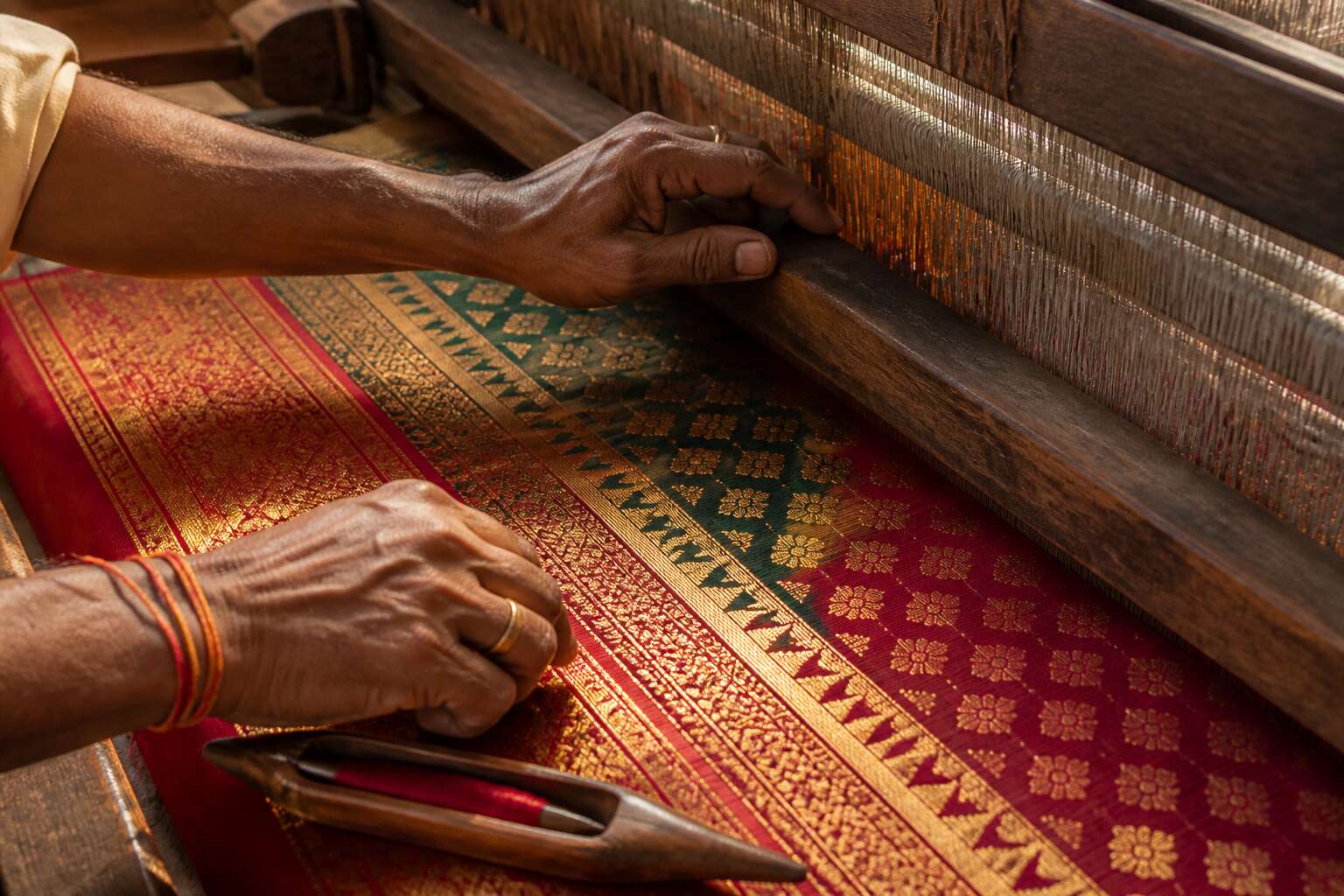
Understanding Traditional Indian Weaving Techniques
Handloom versus Powerloom
A handloom takes its sweet time. A powerloom finishes the job before lunch. That single distinction shapes everything about Indian textiles. Handlooms are slow, deliberate, and frankly, a bit stubborn. Powerlooms are fast, efficient, and produce fabric by the kilometre. The fabric from a handloom carries an irregularity, a human touch that powerloom cannot replicate. That irregularity is not a flaw; it is a certificate of authenticity.
When you examine weaves india, you will notice that handwoven textiles often have a softer drape and a more breathable feel. Powerloom fabric tends to be tighter and more uniform, which suits certain garments but lacks the soul of handwoven cloth.
Consider the practical differences:
– Handlooms use no electricity, preserving traditional skills
– Powerlooms are faster and cheaper, making fabric accessible
– Handloom fabric often commands higher prices
For anyone serious about weaves india, this distinction is essential. The powerloom has its place, but the handloom carries the heritage.
Classic Weave Patterns and Their Origins
Over 400 distinct weaving clusters hum across the subcontinent, each with its own vocabulary of threads. For anyone exploring weaves india, the first lesson is that a pattern is more than an ornament. It is a coded message from a specific village, climate, and family line.
Take the classic checks of the South. They look simple, but their construction requires a certain rhythmic patience. The origins of these weaves trace to temple rituals and royal patronage, where threads were twisted to honour deities. In the North, the shawl weaves use a technique called kani, which involves tiny wooden spools that replicate the logic of tapestry. Then there are the brocades of Banaras, where gold thread is woven into silk using a complex supplementary warp.
Understanding these patterns means reading a map of India’s cultural geography. A few notable origins to recognise:
– Pochampally ikat employs a geometric grid dyed before weaving.
– Kanchipuram silks combine a thick body with a contrasting border.
– Chanderi favours a translucent texture from finely spun cotton.
Natural Dyeing Methods Used in Indian Textiles
The colour in weaves india does not arrive by accident. It is coaxed from bark, root, and insect. In Rajasthan, dyers use alizarin from madder to produce a red that deepens with each wash. Indigo requires a separate vat, a fermenting chemistry that demands patience. The yarn is dipped, oxidised, and dipped again. This process creates the blues of Gujarat and Andhra Pradesh.
My favourite is the use of iron and jaggery to make katha, a black that dulls metal tools. Natural dyes do not obey the clock. They shift with pH, water hardness, and the season. That unpredictability is the signature of the craft! Some clusters specialise in one source, while others mix several, leaving the finished cloth impossible to copy.
Historical Significance of Weaving in Indian Civilization
When Roman senators complained about the empire’s gold flowing east, they were paying tribute to the sheer economic power of ancient Indian looms. The historical significance of weaving in Indian civilization is staggering. It is the foundation of a global trade network that predates the Silk Road. To understand traditional Indian weaving techniques, one must understand the geometry. The warp is the unyielding framework, the weft is the creative interruption. It requires a mathematician’s precision to set up the loom and a poet’s patience to pedal it.
Many processes involve a grid of threads that shifts with every step. 1. Counting threads. 2. Tying the heddles. 3. Mapping the throw. Get that wrong, and you have a $500 mistake.
The artisan relies on years of embedded memory. When you look at weaves india, you see this human-led, mathematically intense system. It is why a single yard of cloth takes days, and why it is so distinct from any machine’s output. That is the weaves india difference.
Regional Specialties Across India
Banarasi Silks and Their Opulent Designs
Banarasi silks stand out among weaves india for their gold zari and dense patterning. These sarees come from Varanasi, a city known for this demanding craft.
The designs feature multiple motifs, each with a specific name:
- Kalga, the pointed paisley
- Bel, the sinuous vine
- Jhumka, the dangling bell cluster
- Jaal, the all over floral net
That jaal alone can take weeks of loom time. Banarasi silk is heavy, a physical trait that signals ceremony. It suits weddings and feasts, not casual errands. The fabric’s stiffness demands patience from the wearer, which is part of its appeal.
Kanchipuram Weaves of Tamil Nadu
A single Kanchipuram saree can occupy a weaver for three weeks, a fact that places it among the most demanding weaves india. The town in Tamil Nadu twists three strands of mulberry silk into one, producing a fabric that feels ribbed and unyielding. I find this resilience defiant. Where Banarasi silk flows with ceremony, Kanchipuram silk holds its ground.
The body and border are woven separately, then joined with a hand-tied interlock. That junction never unravels. This structural honesty is part of the saree’s appeal.
Signature traits:
– Bold contrast borders that frame the drape
– A matching pallu with temple motifs or peacocks
– Zari threads made from silver coated with gold
These elements give the saree ceremonial weight. For a bride, it becomes a statement of permanence. Among weaves india, this one demands respect, not with softness but with endurance.
Pashmina and Cashmere Shawls from Kashmir
Kashmir’s pashmina shawls begin with the under-fleece of the Changthangi goat, gathered at altitudes above 4,000 meters. Each shawl demands three months of handwork. The wool is spun on a wooden spindle called a yinder, then woven on a pit loom. In Srinagar, an artisan may spend weeks on the sozni stitch, each knot a deliberate act.
Pashmina is lighter than wool yet warmer than cotton. Cashmere, the European term, derives from the region’s old name, Kashmir.
The finest weaves india offers include:
- Kani shawls, woven with colored wooden spools
- Jamawar shawls, patterned with trailing florals
- Plain pashmina, valued for its unadorned softness
A single shawl can pass through twelve hands before it reaches the buyer. That labor is what the buyer pays for.
Patola and Ikat Patterns from Gujarat and Odisha
Imagine a Patola sari, its surface a grid of tiny, geometric flowers and elephants, so precisely mirrored on both sides that you cannot tell the back from the front. This is the famous double ikat of Patan, Gujarat, where threads are resist-dyed before they ever touch the loom. The process is brutal in its precision; a single millimeter of error shifts the entire pattern. These weaves india marvels are so labor intensive that a master weaver completes only four to five inches per day, and a single sari can take over a year and cost tens of thousands of rand.
Odisha offers a different ikat philosophy. Here, the craft is fluid and painterly, with “bandha” patterns that feature birds, conch shells, and temples bleeding into one another. The result is softer, more organic.
– Gujarat Patola: Double ikat, geometric perfection, and supreme status.
– Odisha Ikat: Single and double ikat, often with characteristic “chicken wing” or “suta” patterns that blur.
The dyeing technique remains a family secret, passed down through generations in Surat and Sambalpur. These regional styles demonstrate that weaves india are not a single story but a collection of distinct dialects in thread.
Chanderi and Maheshwari Fabrics of Madhya Pradesh
A queen once demanded a sari that could be worn by day and shimmer by night. From that request came Maheshwari, a fabric with cotton for warmth and silk for sparkle. Its borders often reveal a “bugdi” weave, tiny raised dots that catch the eye.
- Chanderi: transparent, lightweight, historically woven with gold threads
- Maheshwari: reversible, with contrasting stripes and checks
These weaves india of Madhya Pradesh are pragmatic luxuries. Chanderi suits the tropical heat, while Maheshwari endures weekly washing. Buyers in South Africa appreciate their breathability and subtle opulence. Neither fabric demands ceremony; it simply elevates the everyday.
The Cultural and Economic Impact of Indian Weaves
Role in Festivals, Weddings, and Ceremonial Attire
During India’s wedding season, the handloom sector records nearly 60 percent of its annual sales. That statistic explains why weaves india carry more than aesthetic value. A bridal trousseau often represents a family’s savings and a community’s collective memory. The sari passed from mother to daughter holds the narrative of generations.
Festivals like Durga Puja and Pongal transform local markets into commercial hubs. Weavers plan their looms around these peaks, working on twelve month cycles. When a South African buyer chooses a handwoven textile, they support this entire network of artisans. I have seen how a single festival order can change a weaver’s year.
Ceremonial demand preserves techniques that powerlooms cannot replicate:
- Each wedding commission finances a weaver’s family for months
- Festival orders sustain regional dyeing and spinning traditions
- Ceremonial garments keep ancestral patterns alive
This trade ensures weaves india remain integral to both heritage and livelihood.
Supporting Artisan Communities and Fair Trade Practices
Every weaves india purchase sends a fair wage through a network of artisans from West Bengal to Johannesburg. A single cooperative in Bengal pays its dyers 40 percent above market rates, and that money flows into local schools and clinics. This is fair trade at work.
Without ethical sourcing, the pressure to abandon the loom for urban labour becomes overwhelming. Here is what fair trade preserves:
- Traditional dye recipes passed through generations
- Women-led weaving cooperatives in Tamil Nadu
- Steady income for rural families during lean seasons
When you choose weaves india, you support an economic ecosystem where artisans plan futures, not just survive the month. That is trade with dignity.
Modern Trends and Styling with Indian Fabrics
Fusion Fashion Combining Traditional Weaves with Contemporary Cuts
Indian heritage fabrics are entering daily wardrobes beyond their original contexts. In South Africa, stylists are combining weaves india with contemporary cuts, producing a fusion that honors tradition without nostalgia. Designers use handloom textiles in sharp tailoring, such as a Kanchipuram border turned into a duster coat or Chanderi cotton shaped into a minimal dress. The tension between dense brocade and clean lines creates visual interest.
- Layering a Patola stole over a white shirt
- Lining a trench coat with Ikat fabric
- Adding a Pashmina panel to a jumpsuit
These options let the weaves remain prominent while fitting a modern silhouette. For South African wearers, this blend enables engagement with global fashion while preserving cultural identity. The adaptability of weaves india ensures their place in tomorrow’s wardrobe.
Sustainable and Ethical Choices in Indian Textiles
Global sales of handloom textiles rose 11% last year. In South Africa, those purchases increasingly end up in daily rotation instead of ceremonial storage. The buyer asks about the weaver before the wash care label. That is the shift.
Sustainability in Indian textiles is not new. Kosa silk farms in Chhattisgarh and indigo vats in Tamil Nadu ran for centuries without synthetic inputs. The modern change is the demand for proof: dye origin, wage records, working looms. That demand shapes how weaves india reach global markets.
Styling follows that logic. A Kota doria saree shrugs over a white tee. A Bhagalpur silk shirt softens against raw denim. These pairings treat weaves india as living materials, not heritage relics. When the garment costs more because the weaver earned fairly, the wearer keeps it longer. I watch buyers run a thumb across the fabric before checking the price. Repair outlasts replacement.
Accessorizing Techniques for Everyday Wear
South African shoppers bought 23% more Indian fabric accessories last year. Most of those pieces sit in drawers. The ones that get worn share a trait: they were styled with intent, not reverence.
Accessorizing with weaves india works best when the fabric leads the look. A bright woven tote carries groceries. A printed stole wraps around a laptop sleeve. The fabric adapts, which is why it gets used daily.
- A narrow woven belt over a plain shirt dress.
- A soft cotton stole folded into a headwrap for humid Durban afternoons.
- A small embroidered pouch layered on a crossbody strap.
Each approach treats the fabric as utility gear. That mindset makes these weaves feel more like equipment and less like heritage.
Care and Maintenance of Handwoven Garments
Modern styling with weaves india feels fresh when the cloth becomes a daily essential! I see Durban stylists layering a handloom Nehru jacket over a plain tee, the texture creating the whole outfit. It looks current without chasing trends.
Caring for these garments is simpler than people expect. Wash them solo in cold water with a gentle detergent. Never wring. Dry flat in shade. Press on the reverse side while damp. Store folded, not hung, because gravity distorts the weave.
- Steam wrinkles instead of ironing directly.
- Rotate your pieces so no single weave gets overused.
With this routine, your handwoven pieces stay vivid and strong for years.
Online Shopping Tips for Authentic Indian Weaves
There is a peculiar pleasure in spotting a handwoven ikat blazer across a Cape Town dinner table. The cloth announces itself before the wearer speaks. Indian fabrics have moved beyond formal saris into tailored separates, and the result is a quiet luxury that mass-produced fashion cannot counterfeit.
Ordered online, authentic weaves india reveal themselves through small imperfections. The threads refuse absolute uniformity. Even the most skilled weaver leaves a human rhythm in the cloth. This is why digital marketplaces overflow with impostors. I have learned to distrust any listing that promises ‘temple grade’ silk at a clearance price.
A merchant who photographs every fold under flattering light is often hiding something. The real article does not need dramatic styling. The genuine weaves india hold depth and texture that a phone camera will capture, provided the package actually contains what was pictured.
Celebrity Influence on the Popularity of Indian Fabrics
From Cape Town to Lagos, celebrities reshape how we see weaves india. A television host’s handloom ikat jacket, a film star’s Kanjeevaram gown at a premiere, these moments turn heritage into a talking point. Social media accelerates the effect. A single red carpet appearance can send thousands of shoppers hunting for authentic textiles.
In South Africa, where bold prints already dominate, Indian weaves offer a nuanced alternative. They carry a quiet gravitas that mass-manufactured fabrics lack. I have watched stylists pair a Gujarati patola stole with tailored trousers or a Maheshwari kurtawith denim, proving these cloths adapt to any wardrobe. This visibility matters. It shifts perceptions from ceremonial relic to a living form, ensuring artisans who create these weaves india receive recognition beyond their villages.



0 Comments