The Art and Craft of Weaving
Defining the Weaver’s Role
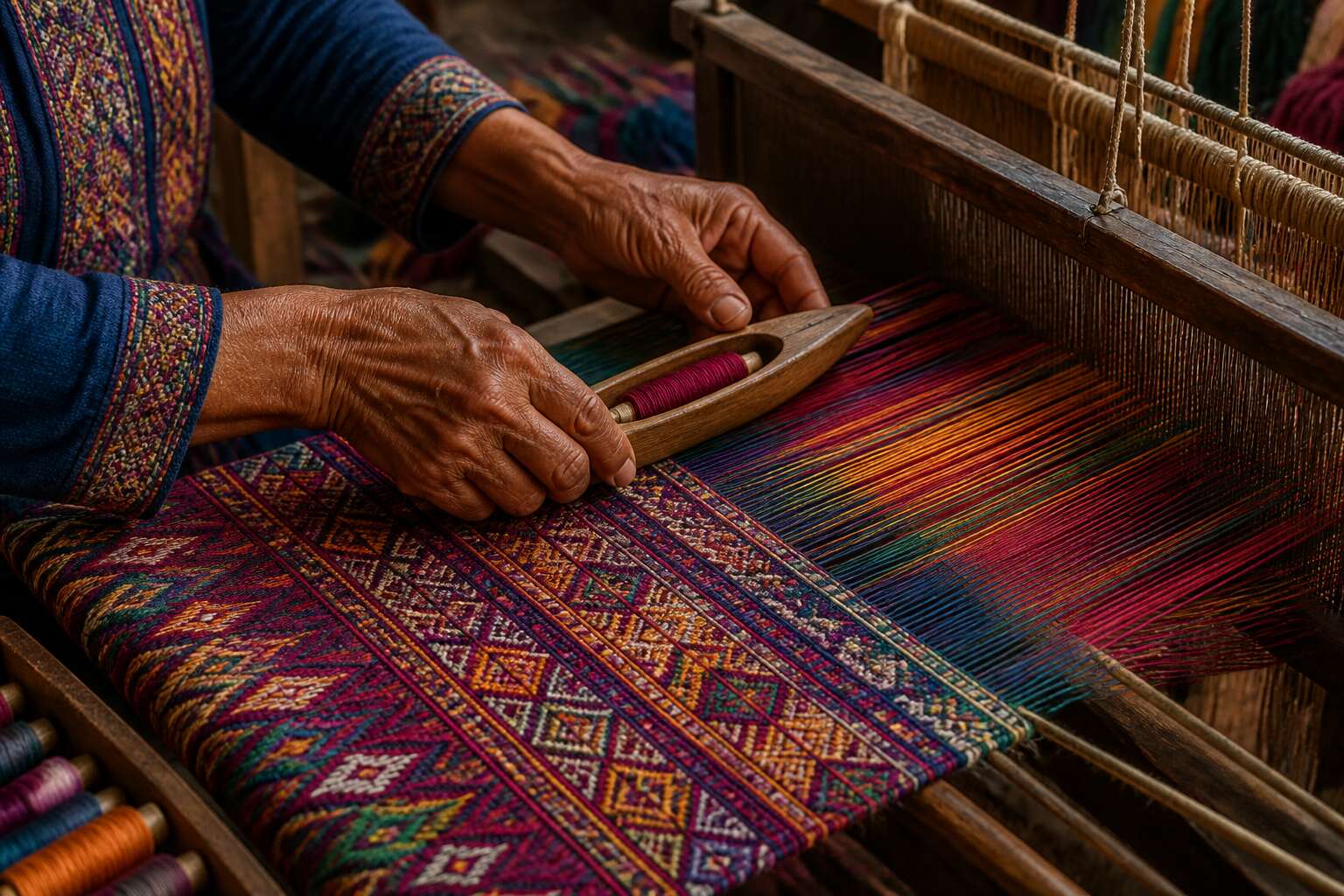
The weaver stands at the centre of textile production. While machines hum in factories, the person who weaves cloth on a loom still commands a unique form of control. They read the warp’s tension, adjust the shuttle’s rhythm, and decide when a pattern deserves a pause. This role demands patience and a tactile understanding of fibre that cannot be rushed.
A skilled weaver prepares the loom with precision. They select yarns suited to the climate, dress the warp, and test the weft for consistency. In South Africa, I have seen this craft carry generations of knowledge, passed down through hands rather than manuals.
The weaver’s role also carries responsibility. They maintain the loom’s alignment, monitor for breakage, and interpret a design’s subtle demands. To be the person who weaves cloth on a loom is to balance tradition, utility, and artistry in every pass of the shuttle.
Essential Skills and Techniques
Watch the hands of a person who weaves cloth on a loom and you will see a series of small corrections. The left hand eases the warp, the right catches the shuttle, a finger taps a broken thread into place. Each motion is a technique refined over hundreds of hours.
Consider what the craft demands:
- Reading the web for defects invisible from above
- Maintaining even beat across the full width
- Managing take-up and let-off tension
- Recognising when a yarn needs more twist or less
The person who weaves cloth on a loom develops a patience that is foreign to our usual habits. I have seen this patience in South African weaving studios, where the weaver waits for the process to unfold at its own speed. They trust the building of a surface, one thread at a time, until the whole holds together. That trust is not passive. It is an active, daily choice repeated thousands of times.
Tools and Equipment Used by Weavers
The person who weaves cloth on a loom handles a range of tools beyond the frame. A shuttle carries weft yarn through the shed. A reed keeps the warp threads evenly spaced. A temple holds the woven cloth at a steady width during the beat. For winding, a bobbin winder and warping mill organize the yarn before it ever touches the loom.
Precision depends on a few measuring devices.
- Pick glass for thread count
- Tension scale for warp firmness
- Ruler and right angle for alignment
A weaver also keeps cutting shears and a small oil can. The floor loom’s treadles raise shafts, the heddles guide the warp, and the breast beam supports the web. That specificity separates a casual hobby from a precise craft.
The Weaver’s Workspace and Setup
The first thing an experienced weaver does in a new room is look for the window, not the loom. Ask anyone who weaves cloth on a loom and they will tell you that poor light hides the very flaws that good light reveals: a snapped warp thread, a dull weft, a cast shadow that disguises a dropped pick.
I keep my own workspace intentionally bare. The floor is swept before every session, because Highveld dust works its way under the loom and throws the base off level. Humidity in Durban makes the warp stretch differently than in Johannesburg, so I adjust the tension each morning before I sit down.
- a stable chair that lets you lean back without shifting the loom
- a clear path to the back of the loom for threading and repairs
- a surface for the weft yarn that sits closer than the shoulder, not further
The setup is not decorative. It is a set of decisions that repeat in every metre of cloth.
Weaving Through History
Ancient Civilizations and Early Weavers
Before the first city rose, before bronze was smelted, someone figured out that crossing threads at right angles could keep a family warm. That anonymous genius is the ancestor of every person who weaves cloth on a loom today. Ancient records show that the craft was already organized labor, not a casual domestic hobby.
The division of labor varied by region:
- In Sumerian temple workshops, mostly women wove woolen textiles that doubled as currency.
- In Egypt, linen weavers were often male, working in state-run factories.
- In Greece, weaving remained a domestic duty for elite women, who produced household cloth and the occasional cunning plan to delay suitors.
Egyptians later refined the horizontal loom, as shown in tomb paintings. The Greeks, ever competitive, celebrated their weavers in myth, although the real ones were usually anonymous. These early practitioners were frequently enslaved, always skilled, and almost never credited by name.
Medieval Guilds and Apprenticeships
Take a moment to picture a medieval town. The clatter of the blacksmith and the shouts of merchants fill the air, but the heartbeat of the economy is often a quieter, rhythmic thump from a second-story window. By the 13th century, the answer to the question of who weaves cloth on a loom had changed dramatically. The craft had moved from the household and the temple into the fortified halls of professional guilds. These organisations dictated every thread of production, setting the standards for quality and controlling the price of cloth.
The guild system was a rigid hierarchy, and entry was a privilege. A weaver’s journey began not in a classroom, but as a child apprentice, often bound by contract for seven years. The master provided room and board in exchange for labour and loyalty. The apprentice learned to dress the loom, a tedious job of threading hundreds of warps, before ever throwing a shuttle. It was a life of drudgery, but it was the only pathway to the loom. The progression was structured and unforgiving:
1. Apprentice: A young person learning the trade with no pay.
2. Journeyman: A skilled worker paid a daily wage, travelling to different towns.
3. Master: The owner of the workshop and a member of the guild’s inner council.
The division of labour in this era was stark. In most European cities, the weavers who owned workshops were men. However, the labour force behind them was vast and often female. Women and girls worked as spinners, warpers, and finishers. They toiled in the shadows, handling the preparation while men took the credit for the finished bolt of cloth. This distinction was a source of tension, as the guilds often barred women from full membership, yet relied heavily on their skills.
Just as in the ancient world, the social status of these artisans was complex. A master weaver could be a man of considerable wealth, sitting on the town council. In contrast, a journeyman was a wanderer, forever at the mercy of the market. The loom itself remained a constant, but its context had changed. It was no longer just a tool for survival; it was a symbol of civic pride and economic power. The cloth they produced, from heavy woollens to fine worsteds, was the currency of international trade. In South Africa, the textile industry has faced similar evolutions, but the artisan spirit of these medieval workers remains a legacy of determination and skill.
The Industrial Revolution’s Impact on Weavers
In 1811, English weavers smashed power looms that ruined their trade. The violence answered a bitter question: who weaves cloth on a loom when a single machine does the work of dozens of men? The handloom weaver, once respected, saw his value vanish in a generation.
The factory system dismantled the old hierarchy. The shuttle’s rhythm moved from cottage windows to deafening sheds in Manchester. Children and untrained labourers, never having dressed a loom, tended the machines. What a strange reversal of the old guild order! The master and the journeyman disappeared from the loom trade, replaced by a stark order:
- Factory owners dictated production.
- Machine operators repeated a single task for twelve-hour shifts.
- Handloom weavers accepted miserably reduced wages.
To my mind, this transformation redefined who weaves cloth on a loom. The answer shifted from skilled artisans to anonymous factory hands. The cloth no longer bore its maker’s mark.
Famous Weavers and Textile Pioneers
Rarely do we ask who weaves cloth on a loom, even though the fabric’s origin matters. Penelope of Greek myth unwove her shroud nightly. Anni Albers turned loom work into abstract art. Gunta Stölzl led the Bauhaus weaving workshop. West African Kente weavers still honor sacred patterns.
These pioneers used the loom for personal expression. William Morris revived handweaving against industrial copies. Ethel Mairet championed natural dyes. South African weavers blend these lessons with local traditions.
Consider a few notable weavers!
- Anni Albers, author of On Weaving.
- William Morris, leader of the Arts and Crafts movement.
- Gunta Stölzl, pioneer of modernist textiles.
Each one answered that question by producing enduring work.
Preserving Traditional Weaving Methods
The KwaZulu-Natal ilala palm weaver splits every frond with her thumbnail, no blade involved. Her method predates colonisation and survives because she refuses to abandon it. Traditional weaving is a living response to fibre, climate, and function, not a museum display.
South Africa holds distinct traditions. The Venda weave tight baskets for brewing. The Xhosa weave palm mats for sleeping. I have watched these hands at work. Each region preserved its own answer to who weaves cloth on a loom, or who weaves baskets and mats instead. That diversity is worth celebrating!
Community preservation efforts:
- Ilala palm weaving in KwaZulu-Natal
- Venda basket making in Limpopo
- Xhosa mat weaving in the Eastern Cape
These communities never stopped. Their methods remain intact because children learn from their elders’ hands.
Cultural and Regional Weaving Traditions
Andean Weavers and Indigenous Textiles
In the Andean highlands, who weaves cloth on a loom is often a woman carrying centuries of encoded knowledge. Indigenous textiles from Peru, Bolivia, and Ecuador function as maps of kinship. Each motif, from the chakana to the condor, holds meaning that varies by village. These weavers use backstrap looms to sit close to the earth and feel every warp thread. There, who weaves cloth on a loom includes men who prep the yarn, yet the matriarch controls the final pattern.
The traditions remain remarkably resilient. Young weavers train under elders, even as synthetic dyes and commercial yarns enter the market. Some cooperatives now protect these practices for ethical fashion.
Consider the range of regional styles:
- Quechua weavers in the Patacancha Valley favor alpaca wool with diamond patterns.
- Aymara communities near Lake Titicaca use bright reds and geometric stripes.
- Weavers in Chinchero, Cusco, blend Incan symbols with Spanish colonial influences.
West African Kente and Adanudo Weaving
In the shaded courtyards of Bonwire, Ghana, who weaves cloth on a loom is a matter of inheritance. The looms are narrow strip looms, tilted toward the weaver. The weavers are men, often Asante descendants, yet women spin the cotton and dye the silk into indigo and ochre.
The most intricate form, Adanudo, demands patience. I have watched a master pause mid-throw to adjust a single thread. Each weft float is lifted by hand against a counterbalanced heddle. The weaver sits low, legs stretched toward the warp beam. Mistakes are rare; the pattern lives in memory, not on paper.
Common Adanudo motifs include:
- Aya, the fern, for resourcefulness
- Gye Nyame, meaning the supremacy of God
- Nea Onnim, the tree of knowledge
Even as factory textiles arrive from Accra, the answer to who weaves cloth on a loom stays with the village. A master weaver knows his thread’s origin and names the spinners by their twist.
Asian Silk Weaving Masters
In Suzhou’s water towns, the question of who weaves cloth on a loom has an ancient answer. Silk weavers have practised here for over five millennia, passing patterns through generations of women. The drawloom requires two artisans: one above pulling cords for individual warp threads, the master below packing each weft with a wooden comb.
The silk filament is reeled, twisted, and dyed with mineral pigments. Brocade, gauze, and satin each demand distinct loom mechanics and years of tactile learning. In India, Varanasi weavers use jacquard attachments to produce gold-threaded zari. Kanchipuram saris are woven in three parts, the body, the border, and the pallu, then interlocked by hand.
- Murshidabad weavers use mulberry silk raised locally
- Assam’s muga silk is naturally golden and never dyed
- Mysore produces a soft, white crepe silk prized for temples
So who weaves cloth on a loom in Asia is often a collective effort, one spanning families, villages, and centuries of unbroken technique. The loom stays low, the hands stay steady, and the thread remembers what the records forget.
Native American Loom Weaving
On the Colorado Plateau, the answer to who weaves cloth on a loom depends on which mesa you stand on. The Diné (Navajo) place the craft primarily with women, and their horizontal treadle looms, adapted centuries ago, produce those unmistakable geometric rugs. Hopi weavers, by contrast, largely men, have kept a vertical loom tradition for cotton and ceremonial sashes. But this was not a static division. The introduction of commercial yarns changed weave structures, while traders and collectors altered designs.
A few things are constant: the weaver’s hands pack every weft against the existing cloth, often with a batten, and the process takes months. The loom is simple, usually two upright poles, crossbars, and a continuous warp. That’s it. No bobbins, no treadles, in the old style.
- Sitting positions vary widely between tribes.
- The warp is spun by hand or, since the 19th century, from store-bought thread.
- The weaver compensates for inconsistent yarn by adjusting tension with a stick rolled into the cloth.
So who weaves cloth on a loom in Native America is actually a list of who else holds the batten.
Scandinavian and Nordic Weaving Heritage
The Oseberg ship burial contained the remains of a large loom, proving its value in Norse society. The craft rested with the women of the household, who spun sheep fleece and wove it into sailcloth and undergarments. So who weaves cloth on a loom in this Nordic heritage? The answer is the matriarchs who managed the vertical looms.
The Icelandic sagas mention the value of these textiles. Weavers in Norway and Sweden produced tapestry, heavy blankets, and everyday garments. They used loom types that allowed for detailed geometric patterns.
Here is a glimpse of the Nordic weaving context:
– The loom produced wall hangings for feasts and longhouse insulation.
– Yarn came from the fleece of native sheep breeds.
These methods created a distinct regional identity across the Norse world.
Middle Eastern and Mediterranean Weaving
The eastern Mediterranean treated cloth as currency, and the weaver occupied a respected place in society. In Egyptian households, women spun flax into linen for garments and burial shrouds. In Syrian and Lebanese cities, male artisans operated horizontal ground looms for silk and cotton blends.
The answer to who weaves cloth on a loom in this region depends on where you looked:
- Egyptian women wove linen on warp-weighted looms.
- Syrian men operated drawlooms for patterned silk.
- Greek women produced decorative tapestry on vertical looms.
Domestic weaving belonged to women who supplied their families. Professional workshops employed men for the urban markets. The craft itself remained identical, but the social standing of the weaver shifted with the setting.
Modern Weavers and Community
Hobbyist and Recreational Weavers
In South Africa, weekend weaving workshops now fill up within days. The craft has shifted from industrial output to personal expression. So who weaves cloth on a loom today? It is often someone seeking a tactile break from screens. Modern weavers include retired professionals and young artists exploring slow design.
Community hobbyists gather at guild meetings or online forums to trade techniques. Some weave for stress relief, others for a sense of accomplishment. A typical weekend workshop might cover:
- ensuring warp tension stays even
- experimenting with natural dye baths
- producing small tapestries for friends
Recreational weavers rarely sell their work. They value the maker’s mark and the imperfect rhythm of handwoven cloth. The loom becomes a space for patience and reflection. Each shuttle pass forces a slower pace, which is exactly why many choose it.
Artisan Cooperatives and Small Studios
Modern weavers often find their rhythm in community artisan cooperatives. These small studios provide shared equipment and working space, where seasoned hands mentor newcomers. In South Africa, collectives in Johannesburg and Cape Town give crafters access to industrial looms without the heavy cost of ownership. So who weaves cloth on a loom today? Increasingly, it is a designer, a social entrepreneur, or a retired teacher looking for structured creativity.
- communal warping sessions for large batches
- bulk dye runs to keep colours consistent
- joint exhibition spaces at local craft fairs
Small studios add another layer. They experiment with sustainable yarns and limited series. The loom becomes a place of shared learning, not isolation. This cooperatively built knowledge changes who weaves cloth on a loom and keeps handweaving relevant in a country with deep textile history.
Fiber Artists and Contemporary Weaving
In bustling urban hubs like Johannesburg, a quiet recalibration of textile production is underway. The question of who weaves cloth on a loom now includes a growing number of architects, graphic designers, and fine artists who treat the warp and weft as a sculptural medium. They are not merely producing fabric; they are engineering texture and structure to challenge the boundaries of functional art.
This shift is partly a response to the global push for slow fashion and ethical manufacturing. The weavers I speak with are deeply analytical about their material choices, often sourcing locally grown cotton or regenerated cellulose fibres. They document the entire lifecycle of a piece, from raw fibre to finished cloth, which appeals to a clientele that demands transparency.
For the community fiber artist, the loom is a tool for social commentary. These practitioners often work with found materials, such as industrial offcuts or recycled plastic, to weave narratives about waste and consumerism. Their work appears in gallery installations rather than on garment racks, yet the technical skill required is immense. They must account for the tensile strength of unconventional yarns and the irregularity of their chosen materials.
The contemporary weaving scene is also defined by its engagement with digital technology. Many artisans now design on software before ever sitting at the bench, using jacquard looms controlled by computer programs to execute complex patterns with precision. This hybrid approach creates a fascinating tension between traditional hand skills and modern efficiency. The resulting textiles possess a geometric accuracy previously impossible to achieve by hand alone, yet they retain the subtle imperfections that signify a human touch.
– Negotiating the balance between artistic expression and commercial viability
– Sourcing ethical dyes and low-impact finishing processes
– Collaborating with industrial mills for larger scale productions
– Navigating the intellectual property of unique weave drafts
The weavers operating in this space are acutely aware of their predecessors, but they refuse to be bound by the past. They view the loom as a platform for ongoing inquiry, a way to ask questions about identity, sustainability, and the value of objects in a digital age. It is a demanding pursuit, one that requires patience, problem solving, and a willingness to fail in public. Yet for these modern practitioners, the answer to who weaves cloth on a loom is simply this: the person who has something urgent to say, and the discipline to say it one thread at a time.
Online Communities and Learning Resources
The question of who weaves cloth on a loom now extends into digital spaces where thousands of weavers share drafts, troubleshoot tension issues, and exchange fibre knowledge across continents. Online forums have replaced the geographical limits of apprenticeship. A beginner in Durban can learn from a master dyer in Scotland within minutes.
These platforms offer structured learning resources that were once guarded secrets.
- Video tutorials that break down complex weave structures
- Digital pattern libraries with downloadable drafts
- Live Q&A sessions with textile engineers
- Marketplace forums for sourcing rare natural dyes
This access transforms technical skill into a shared resource, though it also raises new questions about who receives credit for ancestral patterns.
What stands out is the reciprocity. Experienced weavers critique each other’s sett calculations, while novices bring fresh questions that push veterans to articulate their tacit knowledge. The loom remains a solitary place, but the learning around it has become deeply collective.
Professional Weaving and Industry
Commercial and Industrial Weaving
Industrial weaving is an act of controlled fury. In South Africa’s textile heartlands, the answer to who weaves cloth on a loom is often a technician monitoring a bank of automated looms. These professionals manage yarn tension, warp density, and weft insertion across thousands of threads per minute. The machinery dominates, but human judgment remains essential.
- Loom technician adjusts settings for fabric weight.
- Quality inspector examines greige goods for flaws.
- Production planner sequences orders across shifts.
Each position demands a precise understanding of how a loom behaves under strain. The dust, the noise, the vibration demand constant attention. No artistic romance, only repetition and vigilance. Yet the final cloth carries every decision made in that industrial setting.
Textile Engineers and Loom Technicians
Professional weaving depends on a partnership between textile engineers and loom technicians. These are the people who weaves cloth on a loom in modern mills, yet their hands rarely touch the yarn itself. Textile engineers calculate warp tension, fiber behavior, and weave geometry before production starts. They translate fabric specifications into precise machine instructions, often using simulation software to predict potential flaws.
Loom technicians handle the physical realities that engineering cannot foresee. They calibrate sensors, replace worn parts, and adjust beat-up force on the factory floor. Their work demands a diagnostic mindset and a stubborn tolerance for vibration and noise. When a loom drops a stitch or the weft shifts, these technicians are the first to know. The division of labour is clear:
- Textile engineers optimize loom settings for efficiency and output quality.
- Loom technicians maintain mechanical integrity and troubleshoot breakdowns.
Both roles carry the final responsibility for every meter of cloth. Neither has room for guesswork, but both bring a quiet pride to the machine that makes the fabric.
Tapestry and Artisan Careers
“The South African textile sector contributes over R15 billion to the GDP annually, yet many consumers can’t name the people who make their curtains.” That statement from a local trade union leader frames the industry’s paradox. The scale of this trade remains hidden behind complex machinery and global supply chains.
Professional weaving in South Africa splits into two distinct industrial streams. The first stream involves high volume production for automotive interior fabrics and upholstery. The second focuses on technical textiles for mining and agriculture. Both share a reliance on advanced shuttleless looms that operate around the clock.
Those who weaves cloth on a loom in these environments are a select group of machine overseers. They work in shifts, monitoring feed rates and reviewing digital readouts for tension consistency. Their daily rhythm involves constant walking between stations to check both warp and weft integrity.
The industry tapestry weaves a broader story of manufacturing resilience. South African mills successfully compete on quality for niche export markets, notably in Europe and the United States.
– Production planners schedule loom allocation against order deadlines
– Quality auditors review fabric fineness and pick density
– Maintenance crews manage scheduled downtime for loom component checks
This ecosystem supports stable employment and technical skills development for a growing workforce.
Artisan careers in weaving now attract a new generation seeking hands-on work. These roles differ fundamentally from the past. Today’s artisan uses digital patterns and computerized controls, alongside traditional hand-eye coordination. Programmes at local technical colleges now offer loom operation certifications, often backed by industry partners who guarantee job placement.
For many operators, the answer to who weaves cloth on a loom is someone who understands speed, precision, and material behavior. It requires patience to clear jams and adjust weft carriers without stopping production. This is tangible work, and the tactile satisfaction remains rare in modern labour markets. The loom becomes an extension of their experience and a proving ground for their technical instinct.
Becoming a Professional Weaver
Professional weaving in South Africa offers a structured route into manufacturing. The question of who weaves cloth on a loom in the industrial sector is answered by trained operators who have completed accredited programmes. These programmes cover loom mechanics, yarn behaviour, and quality control. Many mills run internal apprenticeships that combine classroom theory with floor experience.
Becoming a professional weaver demands a specific set of practical competencies. You need to read digital readouts, adjust tension settings, and identify defects in real time. The work is physical and technical at once. It rewards people who stay alert during long shifts and who can troubleshoot without losing production momentum.
Career entry points vary by region and mill type. Some operators start as machine assistants and progress through internal assessments. Others attend technical colleges with dedicated weaving simulators. A growing number of employers now support learnerships that lead to formal trade tests.
In this industry, who weaves cloth on a loom is a specialist with real bargaining power. The skills gap in textile manufacturing keeps experienced weavers in demand. That makes the trade a solid choice for someone seeking stable employment with clear advancement pathways.



0 Comments