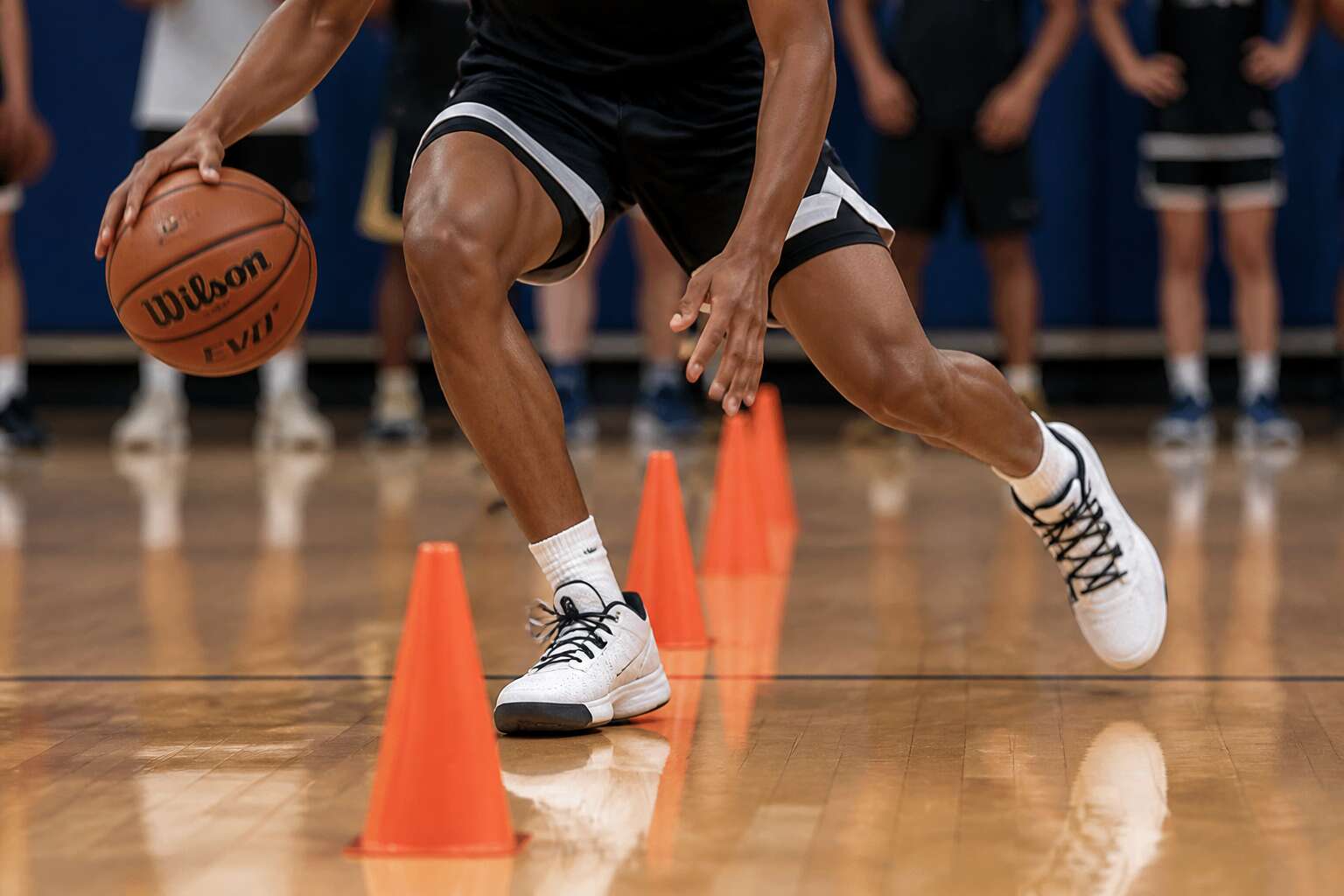
Understanding Weave Concepts in Physical Education
Defining a Weave in PE
Defining a Weave in PE
Weaves in pe are sequences, not single movements. They demand that players exchange positions, pass with precision, and read the flow of play simultaneously. In South African schools, where netball and basketball dominate the curriculum, a weave teaches spatial awareness as much as ball handling.
The pattern is simple in theory: three players, two passes, one continuous motion. Yet its execution reveals something deeper. Each participant must trust that the next person will arrive at the correct spot. That trust is the hidden lesson.
Here is what defines the weave in practice:
– Continuous motion without a pause
– Constant change of direction after each pass
– Communication through eye contact or verbal cues
Ultimately, weaves in pe require coordinated movement under pressure. They show how people adapt in real life, where roles shift and timing decides success.
Benefits of Weave Drills for Students
In South African physical education classes, the moment a drill clicks is unmistakable. Weaves in pe transform from a confusing sequence into a rhythm that players anticipate without thinking. The concept rests on three pillars: timing, space, and trust. Each one surfaces when learners execute a simple cut or a lead pass.
The benefits of weave drills for students show up in measurable ways. Decision speed improves. Peripheral vision expands. Players learn to correct errors in motion. Perhaps most importantly, the drill rewards those who adapt quietly, not loudly.
- Teaches positional responsibility
- Encourages quick pivots after passing
- Develops verbal and non-verbal cues
Watching a group grow from hesitant to automatic is a small marvel. The lesson sticks because it is physical, not theoretical.
Common Variations Across Sports
Understanding weaves in pe starts with reading the floor. The passing lane is not fixed. It shifts with every defender’s step. In basketball, the weave typically runs from wing to wing. In netball, it tightens around the circle edge. In football, it becomes a series of overlapping runs. Each sport alters the spacing, but the underlying logic remains the same: create an angle, then exploit it! This is why weaves in pe build such transferable awareness.
Common variations across sports include:
- The full-court weave, which forces continuous transition
- The short weave, used near the goal to draw defenders
- The reverse weave, where the ball travels against the runner’s direction
- The outlet weave, which starts from a rebound or turnover
The rhythm differs, but the pattern persists. I have seen players who master this transferable structure adapt faster when drills change.
Key Terminology for Weave Patterns
Few players can name what they see in a weave. The pattern moves, but the terms that govern it remain invisible. In my experience, weaves in pe succeed when students learn the vocabulary of timing and orientation. The entry pass sets the order. The lead pass dictates where the receiver steps. The recovery run restores proper spacing.
- Entry pass
- Lead pass
- Receiver’s step
- Recovery run
Each label identifies a specific moment. Naming those moments turns movement into instruction.
Essential Weave Drills for Team Sports
Basketball Weave Drill
In the hush of a gymnasium, the basketball weave drill turns chaos into rhythm. Players pass, cut, and replace in a flowing pattern that demands precision. The weaves in pe classes demand timing that no static drill can replicate. Three lines form at the baseline, each player pushing forward while the ball moves diagonally.
Essential repetitions include a full court sprint, a crisp chest pass, and a deliberate change of direction. Coaches often watch for the receiver stepping too early or the passer drifting sideways. Correct form keeps the triangle intact.
- Execute five continuous cycles before resting.
- Alternate starting positions every repetition.
- Add a defender after the group masters the cadence.
This drill builds spatial awareness without verbal cues, trusting the eyes and the hands to speak for themselves.
Soccer Weave Passing Drill
In South African township leagues, the soccer weave passing drill separates polite passers from assertive ones. The drill asks players to move in a figure eight, but the real test is releasing the ball before the defender’s pressure arrives. The weaves in pe sessions often run this drill with a single ball and a strict offside line, forcing honest movement.
The key is the receiver’s angle. A flat run makes the pass difficult. A curved run invites it. Coaches watch for the player who shouts after the pass is already on its way, a sure sign of misread tempo. The standard sequence follows:
- Start at the cone, pass to the opposite line.
- Move immediately to the back of that line.
- Receive on the half turn.
- Release with the outside of the foot.
Do that three times without a break, and the group moves in unison. That is where weaves in pe become a tactical exercise, not a mere warm up.
Hockey Weave Pattern
Hockey coaches in Gauteng high schools run the weave against a floating defender, not a static cone. In weaves in pe, the hockey weave pattern shifts the focus to stick control and ball drag. The player receives with the stick open, then pushes the ball forward, creating a false lead.
For essential weave drills, use a 10 meter square. The passer must deliver the ball into the runner’s path, not onto the stick.
- Run diagonally across the square.
- Receive on the reverse stick.
- Push the ball back and spin.
This pattern teaches spatial awareness under pressure. The ball moves faster than the defender’s reach, and the weave becomes a test of composure.
Volleyball Weave Rotation
Volleyball weave rotation demands precision. Players move in a continuous loop from serve receive to setter, then to the attack line. Each player must adjust their angle without breaking stride.
- Start with three players at the baseline.
- Player one passes to the setter, then sprints to the back of the line.
- Player two approaches the net for a set, then rotates to the right sideline.
- Player three covers the deep corner before joining the next wave.
This drill mirrors real match transitions. Weaves in pe often focus on handoffs or stick work, but volleyball rotation builds court awareness and timing. The result is coordinated movement across the court.
Football Option Weave
The football option weave demands a different kind of discipline. In physical education, weaves in pe usually emphasise continuous passing or stick work, but the gridiron option adds a defensive read to the rhythm. The quarterback and running back move in tandem, with the ball carried low and pitched only when a defender commits to the wrong gap.
This drill forces students to practise timing under pressure. Start with two offensive players facing one defender. The quarterback sprints toward the sideline, the running back trails on a parallel line.
- Step one: the mesh. The running back reaches for the ball without slowing.
- Step two: the read. The defender’s helmet dictates the pitch.
- Step three: the escape. The back cuts upfield once the ball is free.
Running this repeatedly in class builds spatial awareness and trust. The option weave rewards patience and sharp footwork, qualities that transfer to any sport.
Progressions and Adaptations for Weave Training
Beginner Weave Drills
Most physical education teachers agree that the weave pattern is best introduced through static, walk-through repetitions. Learners grasp the footwork sequence faster when cones are spaced generously, allowing each student to establish a rhythm before adding speed. From there, coaches can tighten the gaps and introduce a defensive dummy, which forces sharper angles and quicker decision making.
A solid progression for beginners might follow this order:
1. Walk the weave without a ball
2. Jog the weave with a ball but no defender
3. Execute the weave at game pace with passive resistance
What I appreciate about weaves in pe is their plasticity! You can adjust cone spacing, implement time limits, or require specific foot patterns to match learners’ confidence levels. Younger students manage well with three cones, while advanced groups can handle a second ball or a verbal call before each pass. These adaptations keep weaves in pe relevant across grade levels without diluting the core skill.
Intermediate Weave Sequences
The difference between beginner and intermediate weaves in pe is not speed; it is anticipation. Coaches in South African schools use a 4-cone diamond to create crossing paths that force players to read defenders before receiving the ball. Once athletes manage that pattern, they can advance to a moving defender who shadows the ball carrier.
A useful progression for this stage:
- Add a second ball to raise cognitive load
- Narrow cone gaps to shorten passing windows
- Call a direction change midway through the sequence
These adaptations keep weaves in pe challenging without overwhelming players. Fatigue distorts footwork, so monitor effort levels closely. For intermediate learners, the sequence should demand sharper decisions with every repetition.
Advanced Multi-Ball Weaves
For South African school teams, multi-ball drills separate coordinated sides from merely fit ones. When players must track two spheres while completing their own pass, the drill becomes a lesson in controlled panic. The difference between a good unit and a great unit shows up in how they handle that panic.
To progress, stagger the entry points for each additional ball. A five-second delay between launches forces the late group to read the developing action before making their first move. Colour coded pathways or rotational stations add further layers without making the session chaotic.
- Three balls for every six athletes
- A verbal call before every pass
- A direction swap on a single clap
Each adaptation changes the rhythm of weaves in pe. The heart rate climbs, the cues multiply, and players learn to trust their peripheral vision over their assumptions!
Adaptive Weaves for Different Skill Levels
Adapting weaves in pe requires assessing the group before the drill. A class with mixed ball handling experience will not move at the same tempo. Forcing everyone onto one progression frustrates both struggling and advanced players. Split groups by confidence rather than fitness.
For less confident players, shorten the passing distance and remove any defensive element. For stronger groups, introduce a moving target or a directional call mid sequence. Keep the core rhythm intact, but alter the demand on each player!
- Use larger balls for younger groups and smaller balls for advanced players
- Change the number of passes before the finish
- Add a second ball only when the first pattern runs smoothly
Progressions should change one variable at a time. Adjust speed, distance, or player count, and each adaptation tests a specific skill. When the group masters that variable, layer the next one. This keeps weaves in pe challenging without breaking the lesson flow.
Incorporating Equipment Constraints
Equipment constraints often dictate how weaves in pe unfold. A single basketball for thirty students forces a different rhythm, one built on patience. Two cones and a wall still provide enough structure to maintain the pattern.
Consider these simple shifts when gear runs short:
– Use wall passes when the ball supply runs thin
– Swap tennis balls for full sized balls in tight indoor spaces
– Rotate stations so every group shares the same equipment
Each constraint changes the timing, not the weave itself. Fewer balls means longer waits, so shorten the distance. Smaller spaces mean sharper angles, so reduce the player count. Weaves in pe should bend around available resources, not wait for perfect conditions.
Small-Sided Weave Games
Progressions and adaptations for small-sided weave games allow teachers to adjust intensity without losing the core pattern. A four player weave in a half court teaches timing under pressure. I often reduce the court size before increasing speed, which forces quicker decisions. Small-sized weaves in pe promote constant movement without overcrowding. Try three player triangles for tighter passing lanes, then progress to five player circles that demand spatial awareness. For example, when equipment constraints persist, we use a single ball with staggered starts. That adaptation changes the rhythm, not the weave.
- Start with two balls to increase cognitive load.
- Move defenders from passive to active.
- Increase the distance between cones gradually.
Each progression builds on the previous one while keeping the weave recognizable. These small-sided formats hone communication because every player touches the ball often, making weaves in pe effective for mixed ability classes.
Integrating Weaves into PE Lesson Plans
Aligning Weaves with National Standards
Most teachers treat weaves as a warm-up. That misses the point entirely! The true value of weaves in PE shows when you align them to national standards. In South Africa, CAPS Physical Education norms demand tactical awareness, spatial control, and cooperative play. One weave sequence can cover all three. Start with the standard you must address, then choose a weave variant that forces the required decision. Map each standard to observable actions. For example:
- Identify the core skill, such as changing direction under pressure.
- Select a weave pattern that exaggerates that skill.
- Adjust spacing or speed to reach the standard’s proficiency level.
This ensures each cone and pass supports the standard directly. It turns lesson planning into a repeatable process.
Warm-Up Activities Featuring Weaves
A warm-up that features weaves in PE does more than raise the heart rate. It primes the body for lateral movement and the mind for anticipation. Begin with a slow, single-file weave that lets learners find their rhythm. Then add pressure. Use this progression:
- Start with four cones spaced wide.
- Narrow the gaps each round.
- Add a trailing defender.
- Finish with a pass at the end of the weave.
Keep the entire sequence under five minutes. Change the spacing between cones every round. Call out a direction change mid-drill. Pair learners and have one mirror the other’s path. These small adjustments keep the warm-up alive and build the neural pathways learners need for the main lesson. Weaves in PE work best when they serve the lesson, not the clock.
Assessment Strategies for Weave Skills
Weaves in pe should be mapped to specific outcomes before the term starts. Decide which skill the weave will reinforce, then build the drill around that decision. A lesson on spatial awareness might use wide cones. A lesson on decision making might add a defender. The drill becomes part of the lesson’s spine, not a filler.
Assessment needs clear checkpoints. I watch for timing, spacing, and the quality of the final pass. A simple rubric with three levels works well: emerging, developing, and consistent.
- Timing: does the learner move with the group?
- Spacing: does the learner maintain the gap?
- Pass accuracy: does the final pass reach the target?
Record results on a clip chart. Review after four lessons to spot patterns. Adjust the drill if learners stall. This keeps weaves in pe honest and measurable.
Classroom Management During Weave Drills
Integrating weaves in pe requires a deliberate sequence. I slot the drill after the skill introduction and before the scrimmage. That placement gives the movement purpose without dragging the lesson. Classroom management during weave drills starts with clear boundaries. I mark the lane lines with cones and assign each learner a numbered starting spot. This removes the guesswork and keeps transitions sharp.
I use a simple call and response signal to reset the group. The structure cuts down on idle chatter and keeps the drill flowing. If a group stalls, I shorten the distance rather than raise my voice. A few rules keep the weave honest:
- Freeze on the whistle, not after the pass.
- Stay in your lane until the turn.
- Call for the ball when you are ready.
These rules turn a chaotic loop into a repeatable pattern.
Cross-Curricular Connections
Weaves in pe use a defined sequence of passes and pivots. That sequence shares logic with timetables, code writing, and map reading.
Cross-curricular connections emerge naturally when you frame the drill as a problem solving task. Ask learners to measure angles on the weave path, or to call out landmarks if the gym becomes a town grid.
- Use compass directions for each lane change.
- Record passing counts and graph them afterwards.
- Pair the weave with a poem about rhythm and movement.
The beauty is that the drill carries its own learning layers without extra equipment.
Common Mistakes and Troubleshooting Weave Drills
Spacing and Timing Errors
Spacing and timing errors can derail even the most practiced weaves in PE. When players bunch up, the pattern collapses. A common mistake is starting the next pass before the receiver clears the cone, forcing the ball behind the runner. Fix this by slowing the drill down. Have players count steps between passes or use floor markers to enforce distance.
Another issue is the overlong pause at the end of the weave. That hesitation breaks rhythm and lets defenders recover. Add a verbal cue, like a clap, to signal the next movement. Or set a metronome for the drill.
- Check each player’s starting position against the drill diagram.
- Confirm the pass leads the runner, not the spot where they were.
- Increase spacing by one metre if turnovers occur.
Smooth weaves in PE depend on trust and timing, not speed.
Passing Accuracy Issues
Passing accuracy in weaves in PE fails when players target the body instead of the space ahead. The receiver slows down, the defender recovers, and the pattern breaks. I have seen more drills ruined by a lazy pass than by any other single error.
Fix the pass before fixing the speed. The passer’s elbow should point at the receiver’s chest, but the ball should land a full stride ahead. A simple drill: place a cone where the pass should arrive. Players aim for the cone, not the runner. If passes keep falling short, check the grip. If they sail high, check the wrist snap.
- Shorten the distance between players to reduce travel time.
- Use a two handed push pass to eliminate spin errors.
The best weaves in PE are the ones where every pass lands cleanly before the next movement begins.
Communication Breakdowns
Communication breakdowns turn weaves in pe into a game of guesswork. A player who hesitates, calls late, or assumes the wrong receiver can stall the entire sequence faster than any physical error. The problem is rarely effort. It is clarity.
Groups in weaves in pe often fail because they mix cue systems. Some shout, some point, some rely on eye contact. When these clash, the ball goes nowhere near its target. In my experience, a simple rule fixes most of it: call the name before releasing the pass. That one syllable removes all doubt.
Other breakdowns follow familiar patterns:
– The passer who never looks up.
– The receiver who runs without asking.
– The third player who stays silent when the pattern shifts.
Stop the drill when these appear. Let the group talk it out. A weave only flows when everyone agrees on what the sound of a good pass is.
Corrective Cues for Weave Execution
Seventy percent of weave turnovers happen before the pass, not after it. Players rush their footwork and turn the drill into a rugby scrum. The most common mistake in weaves in pe is stepping toward the receiver instead of away. That tiny error kills the space you just created. Fix it with a loud corrective cue: “Plant and pivot!”
Another regular culprit is the floppy wrist. A pass that wobbles forces the receiver to slow down. Correct by snapping the elbow and follow through to the chin. Try these cues for immediate results:
- Say “pop” when the ball leaves your hand.
- Point at the spot where the receiver should catch.
Keep the drill moving. Stop only for safety, not for perfection. The group learns more from one corrected step than from ten silent repetitions.
Modifying Drills for Large Classes
When weaves in pe stall, the problem is often a crowd. A class of thirty players makes a three person weave chaotic. The fix is to split groups and stagger starts. Give each trio a lane and a different starting point. That keeps the ball moving and the chaos down.
- Players stand still waiting for a pass.
- Cones disappear under a cluster of feet.
- The ball spends more time on the floor than in the air.
Troubleshooting gets easier when you watch the space between cones. If players bunch up, widen the gap. If passes go astray, slow the tempo. Large classes need more reps, not more silence. Adjust the distance, adjust the speed, and let the drill breathe.




0 Comments